
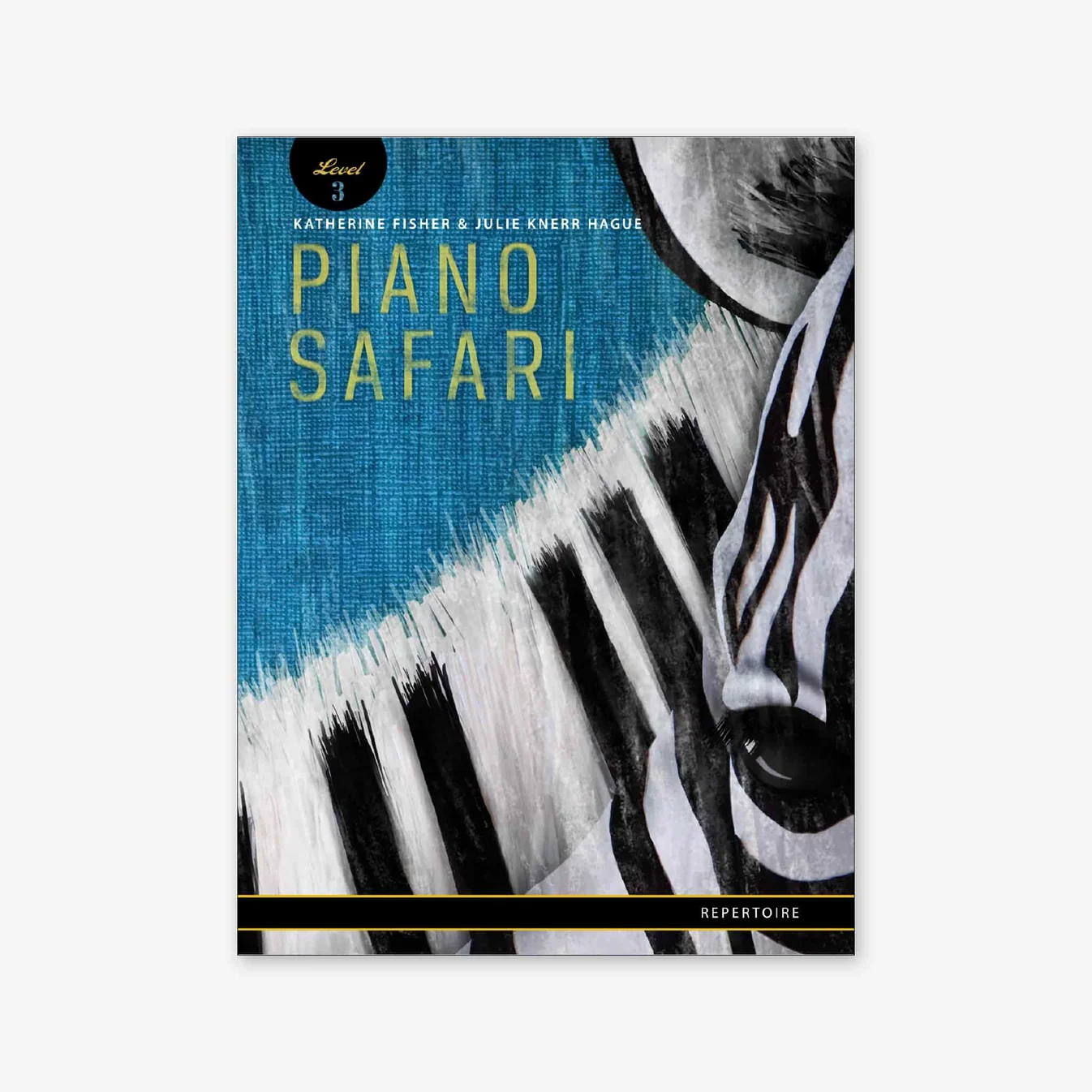

Piano Safari – Piano Repertoire Book 3
Piano Safari Repertoire Book 3 is the core book for Level 3 of the Piano Safari method. It’s a 108-page collection of 45 pieces for late elementary to early intermediate students (SKU PSRep3).
This book marks a turning point. In Levels 1 and 2, students learned some pieces by ear and imitation while their reading caught up. Piano Safari’s Teacher Guide says that by Level 3 the gap between what a student can play and what they can read should be nearly closed, so rote pieces are no longer part of the book. Students read every piece themselves. The music sounds like “real” piano repertoire: sonatinas, waltzes, etudes, a tarantella, a rag, and folk-song settings.
Who is this book for?
Publisher level: Level 3, listed by Piano Safari as Late Elementary.
Approximate student level: Late Elementary to Early Intermediate.
It’s for students who have finished Piano Safari Level 2. They should already read intervals from 2nds through 5ths from any note, play major and minor pentascales and triads, and use some pedal. Piano Safari’s guide plans around 45-minute lessons and suggests at least 45 minutes of practice, five or six days a week.
How is Repertoire Book 3 organized?
An Introductory Unit reviews Level 2. Then each of seven units centers on a key, and the Technique Book, Theory Book, and Sight Reading Cards all work in that same key:
| Unit | Key focus |
|---|---|
| Unit 1 | C major |
| Unit 2 | A minor (with C major) |
| Unit 3 | G major |
| Unit 4 | E minor |
| Unit 5 | F major |
| Unit 6 | D minor |
| Unit 7 | Review of all six keys |
New musical skills along the way include sixteenth notes (first in Czerny’s “The Hummingbird”), 6/8 time (first in Diabelli’s “Arietta”), swung eighths, and more pedal.
What’s inside Piano Safari Repertoire Book 3?
All 45 pieces, in book order, as listed in Piano Safari’s table of contents:
Introductory Unit
- Anton Diabelli — Scherzo and Trio, Op. 149, No. 6
- Julie Knerr Hague — Ancient Ruins
- Franz Wohlfahrt — Summertime
- Franz Wohlfahrt — Somber Procession
Unit 1
- Julie Knerr Hague — Kinetic Etude
- Julie Knerr Hague — Canyon Sunset
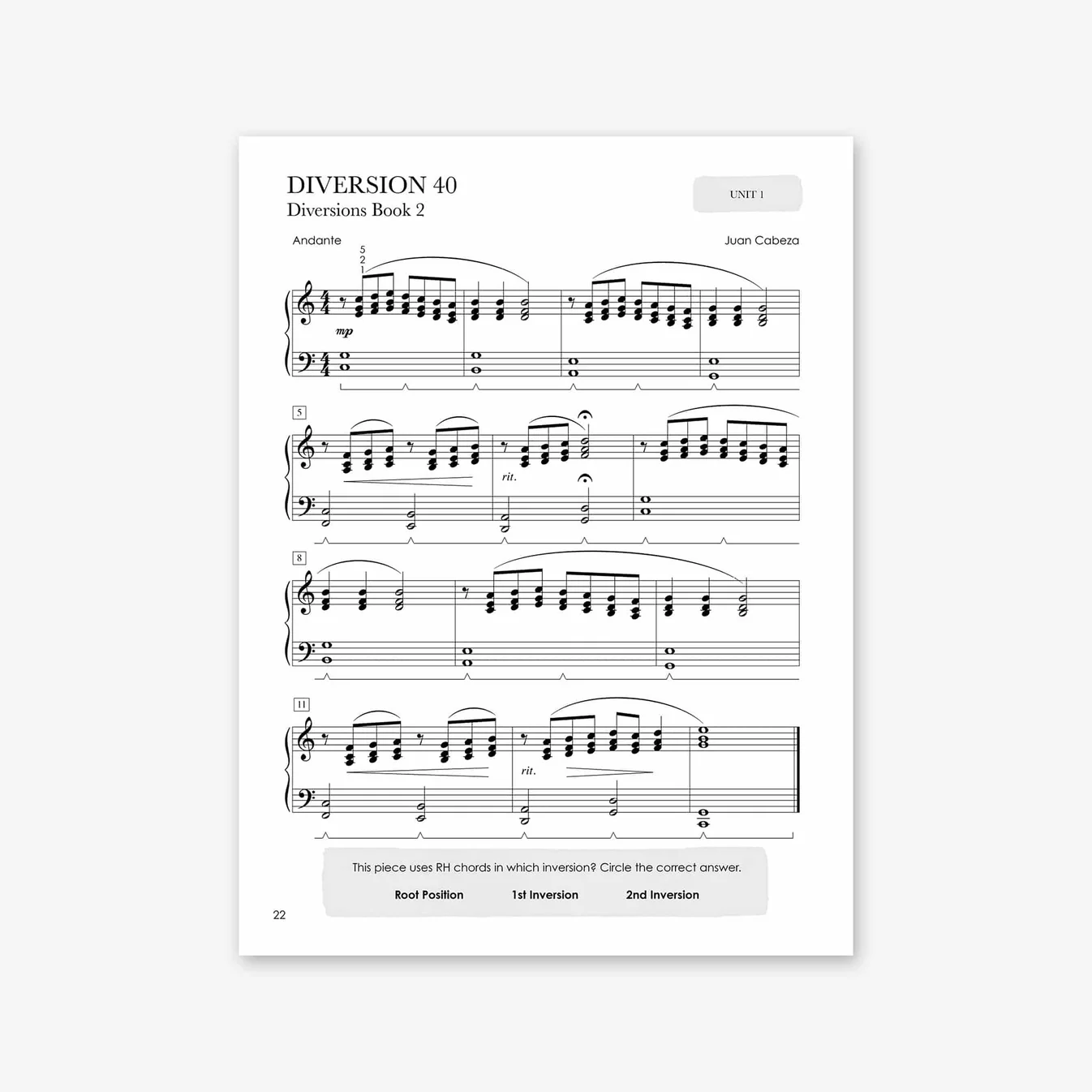
- Cabeza — Diversion 40
- Cabeza — Station 11
- Alexander Reinagle — Bagatelle, Op. 1, No. 9
- Carl Czerny — Giocoso, Op. 599, No. 12
Unit 2
- Franz Wohlfahrt — Emperor Penguin March, Op. 87, No. 37
- Julie Knerr Hague — Dance of the Merry Seahorse
- Katherine Fisher — Spanish Dance
- Cabeza — Station 10
- Julie Knerr Hague — Hopeful Beginnings
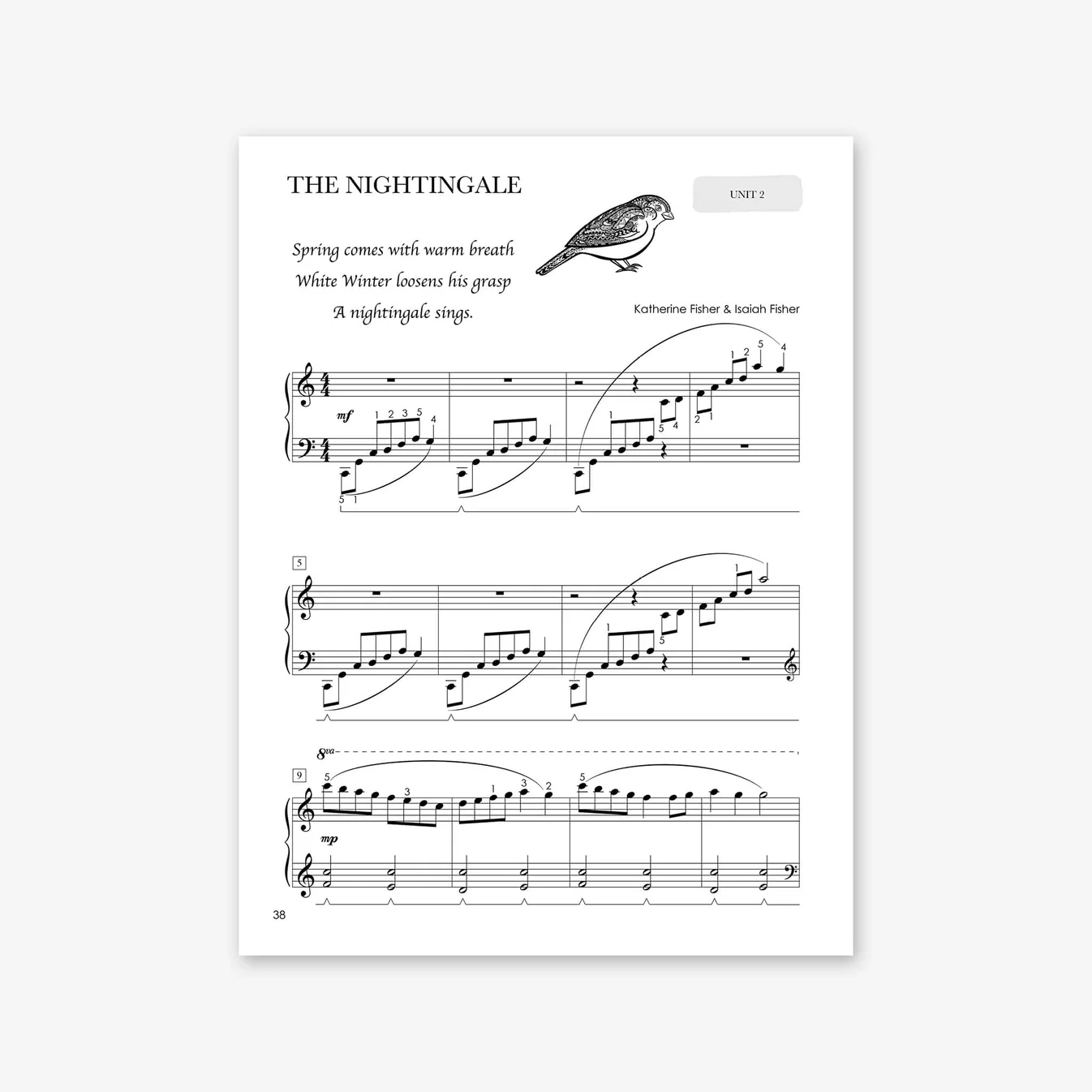
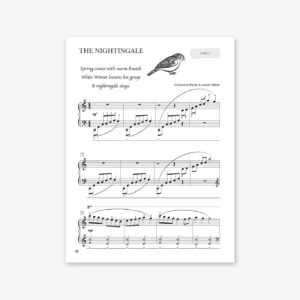
- Katherine Fisher — The Nightingale
Unit 3
- Carl Czerny — The Hummingbird, Op. 777, No. 10
- Carl Czerny — Petite Waltz, Op. 777, No. 3
- Louis Köhler — The Swirling Brook, Op. 190, No. 31
- Alexander Reinagle — The Woodpecker, Op. 1, No. 14
- Louis Köhler — The Playful Pup, Op. 190, No. 18
- Béla Bartók — Hungarian Folk Song
Unit 4
- Cornelius Gurlitt — Bear Dance, Op. 136, No. 10
- Cornelius Gurlitt — Tell a Joke, Op. 117, No. 7
- Julie Knerr Hague — Whirling Snowflake Waltz
- James Hook — Gavotte, Op. 37, Lesson 1
- Theodor Oesten — Excursion, Op. 61, No. 23
- C. Fisher — Autumn Mist
Unit 5
- Julie Knerr Hague — The Alpine Flute
- Anton Diabelli — Arietta, Op. 149, No. 5
- Vladimir Rebikov — The Bear
- Renaud de Vilbac — Romance
- Frank Lynes — Tarantella, Op. 14, No. 8
- Jean-Baptiste Duvernoy — Picnic by the Seine, Op. 176, No. 8
Unit 6
- Fisher & Fisher — A Pirate’s Escapade
- Carnival of Venice (arr. Gobbaerts)
- Cornelius Gurlitt — The Midnight Gallop, Op. 82, No. 65
- Carr — Etude No. 6
- Cornelius Gurlitt — Sonatina, Op. 214, No. 2, second movement
- C. Fisher — Chromatic Rag
Unit 7
- Franz Wohlfahrt — The Winter Wind, Op. 87, No. 42
- C. Fisher — Highland Bagpipes
- Julie Knerr Hague — Starlight Serenade
- Frank Lynes — Sonatina, Op. 39, No. 1, first movement
- C. Fisher — Sunrise Over the Yangtze
Where does Book 3 fit in the series?
Before it comes Repertoire Book 2 (SKU PSRep2). At Level 3 it pairs with:
- Technique Book 3 (SKU PSTech3) — scales, chords, and accompaniment patterns in each unit’s key
- Theory Book 3 (SKU PSTheory3) — chords, analysis, and harmonizing in each unit’s key
Piano Safari’s Level 3 Pack is Repertoire Book 3, Technique Book 3, and the Sight Reading & Rhythm Cards 3. MP3/MIDI accompaniment tracks for 19 of the pieces are sold separately by Piano Safari as a download.
Level 3 is the last level of the children’s method. Piano Safari also publishes later books, such as the Czerny Etudes for the Progressing Pianist and the Advancing Pianist series. Your teacher will know which one fits next.
Several pieces from this book are also sold as single sheets at August Muse: The Nightingale (PSNightingale), Whirling Snowflake Waltz (PSWhirling), Highland Bagpipes (PSHighlandPipes), Starlight Serenade (PSStarlight), and Sunrise Over the Yangtze (PSSunrise).
Product Details
| Field | Detail |
|---|---|
| Title | Piano Safari Repertoire Book 3 |
| Series | Piano Safari (children’s method), Level 3 |
| Instrument | Piano |
| Product type | Method / repertoire book |
| Publisher level | Level 3 (Late Elementary) |
| Approximate student level | Late Elementary to Early Intermediate |
| Recommended ages | 6–11 |
| Authors | Katherine Fisher and Julie Knerr Hague |
| Publisher | Piano Safari, LLC |
| Pages | 108 |
| Contents | 45 pieces in an Introductory Unit and Units 1–7 |
| Media | MP3/MIDI accompaniments sold separately by Piano Safari |
| SKU | PSRep3 |
Frequently asked questions
Are there still rote pieces in Book 3?
No. Piano Safari stopped including rote pieces at Level 3 because students can now read what they play. A teacher may still teach a tricky passage by demonstration.
Is “Carnival of Venice” in Repertoire Book 3?
Yes, in an arrangement by Gobbaerts, in Unit 6.
Which sonatinas are in this book?
The second movement of Gurlitt’s Sonatina, Op. 214, No. 2, and the first movement of Lynes’s Sonatina, Op. 39, No. 1.
Do we need Technique Book 3 too?
Piano Safari designed them as a set, and both are in its Level 3 Pack. The technique book covers the scales and chords for each unit’s key.
Best For
- Piano Safari students who finished Level 2
- Late elementary students ready for real classical repertoire
- Kids who want variety, from sonatinas to a rag and a tarantella
- Teachers who like repertoire organized by key
- Building toward early intermediate piano
Heads-up for families: Piano Safari’s guide suggests about 45 minutes of practice, five or six days a week, at this level. It helps to plan for that when the new book comes home.
Stop in and flip through it. The mix of styles is easy to see once you open it.
Available at August Muse
Piano Safari Repertoire Book 3 is available at August Muse in downtown Elizabethton, TN, along with Technique Book 3 and Theory Book 3. Come in, or call ahead and we’ll hold a copy for you.
Reviews
There are no reviews yet.