
Piano Adventures Level 3A – Theory Book (2nd Edition)
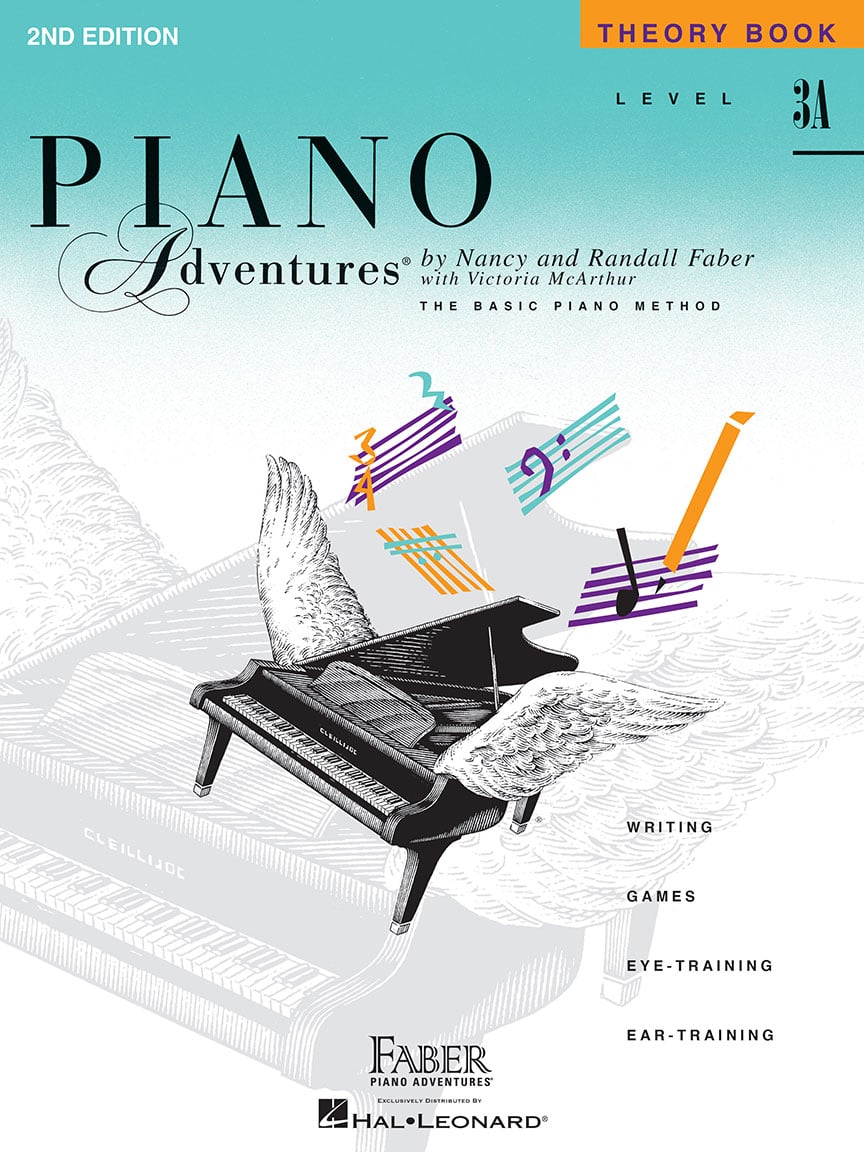
Piano Adventures Level 3A – Theory Book (2nd Edition) (Publisher Item No. FF1088; Hal Leonard #00420181) is the 40-page write-in theory companion to the Level 3A Lesson Book (2nd Edition) by Nancy and Randall Faber. Redesigned for the 2nd Edition to integrate Early Intermediate theory concepts directly with keyboard playing, it combines written notation analysis with primary-chord harmonization, sightreading (“Eye-Training”), listening drills (“Ear-Training”), and creative composition.
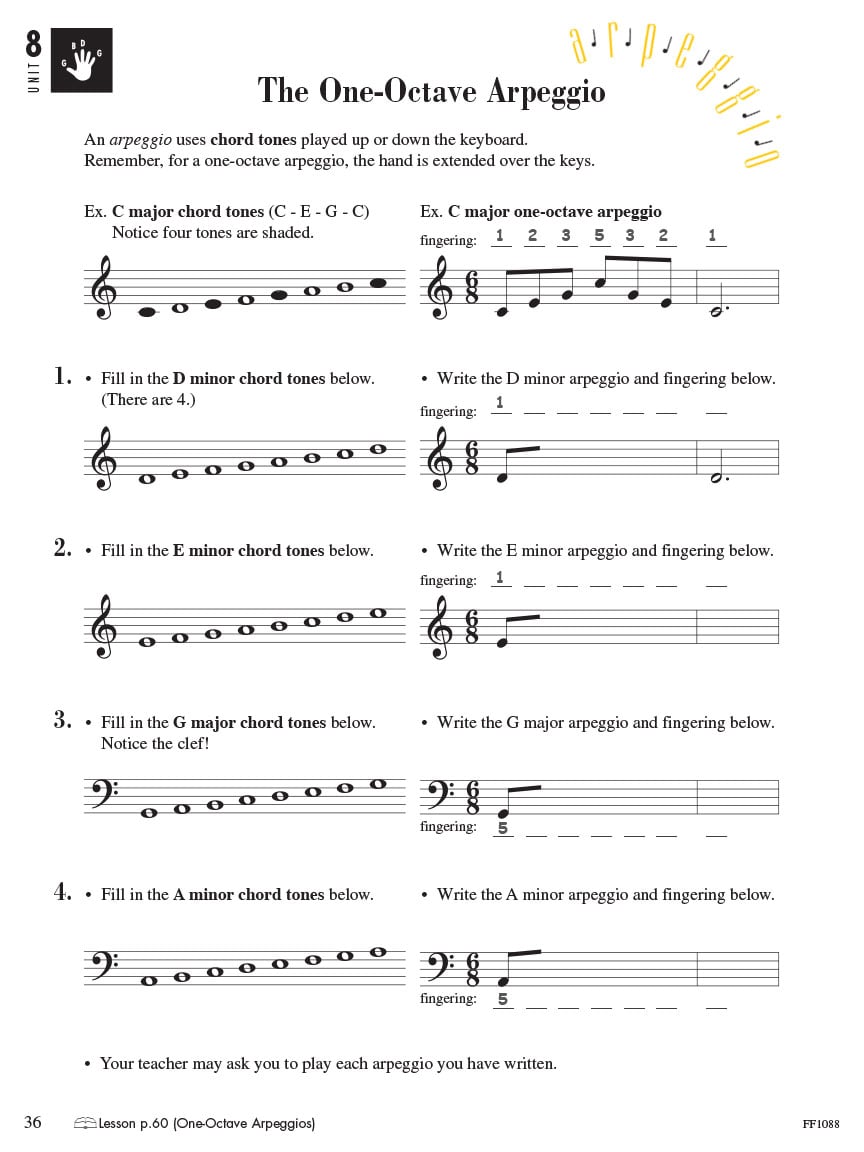
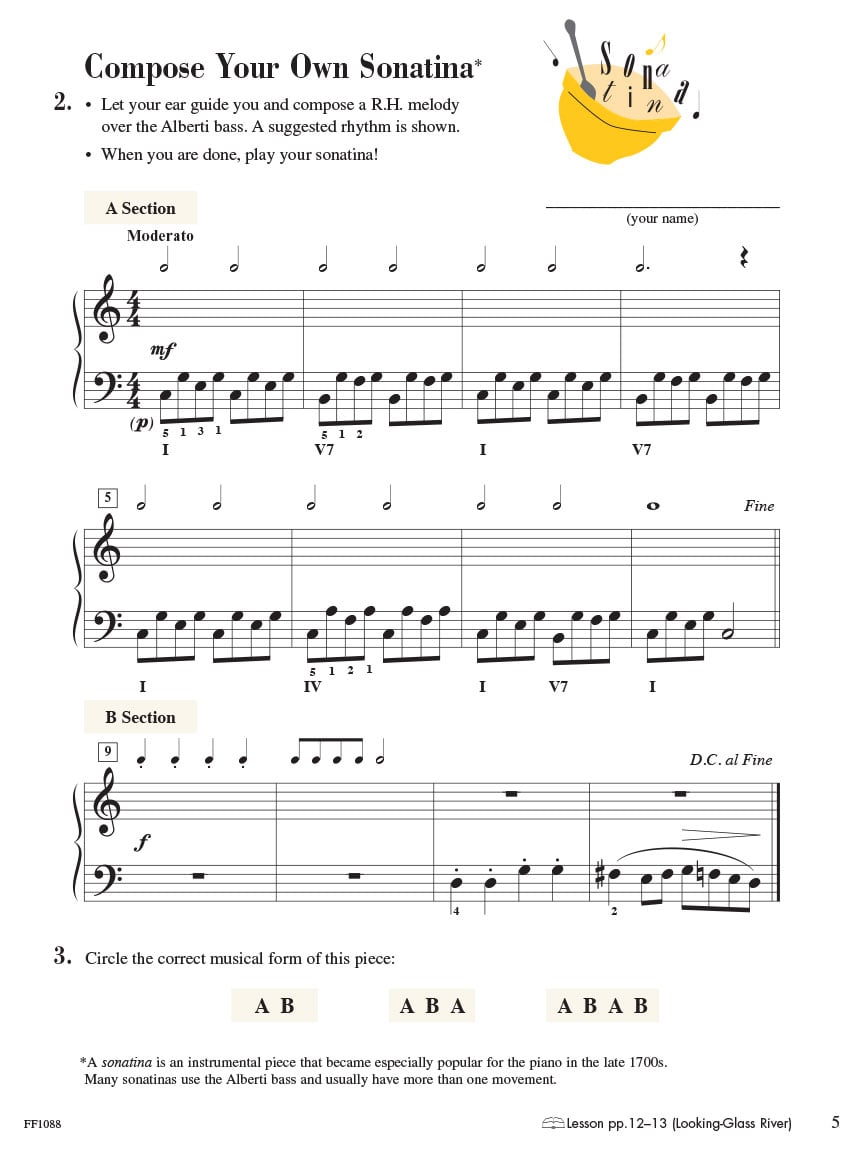
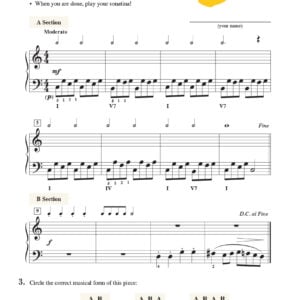
Students apply every new Level 3A concept—from 3/8 and 6/8 time signatures and the interval of a 7th to the chromatic scale, D Major primary chords, and one-octave arpeggios—by composing a mini-sonatina over an Alberti bass, improvising in D Major, and analyzing classical pieces by Edvard Grieg and Jacques Offenbach.
Who is this book for?
Publisher level: Level 3A
Approximate student level: Early Intermediate
Students beginning the Level 3A Theory Book should have completed Piano Adventures Level 2B and be studying the Level 3A Lesson Book (2nd Edition) (FF1087). They should already understand one-octave C, G, and F major scales, I, IV, and V7 primary chords, intervals through the 6th, and eighth-note and dotted quarter-note rhythm patterns.
What’s inside Piano Adventures Level 3A – Theory Book (2nd Edition)?
Correlated unit-by-unit across 40 pages with the Level 3A Lesson Book (2nd Edition), this workbook builds Early Intermediate analytical and creative skills:
- Scale Review, Alberti Bass & Harmonization: Applying “Harmony Rules” (I chord for scale degrees 1–3–5, IV chord for 1–4–6, V7 chord for 2–4–5), composing a right-hand sonatina melody over an Alberti bass accompaniment, and analyzing Edvard Grieg’s “Morning.”
- The Interval of a 7th & Outer Ledger Lines: Identifying and writing melodic and harmonic 7ths on the staff, ear-training recognition of 3rds, 5ths, and 7ths, and reading high and low ledger-line notes.
- 3/8 and 6/8 Compound Meter: Adding bar lines and metric counts in 3/8 and 6/8 time signatures (“Bar Lines to the Rescue!”), sightreading compound-meter melodies including “The Rope Swing,” and harmonizing in F Major (“Binary Dance in F”).
- Cut Time, Syncopation & Swing Rhythm: Counting 2/2 cut-time rhythms and syncopated patterns in “Peanuts and Popcorn” and Offenbach’s “The Can-Can.”
- The Chromatic Scale: Writing ascending and descending chromatic scales, fingering drills, and creative chromatic improvisation in “Music for a Time Machine.”
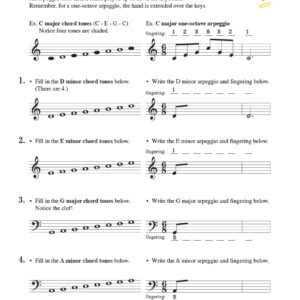
- The Key of D Major, Triplets & Arpeggios: Writing the D Major scale and two-sharp key signature, harmonizing with D Major I, IV, and V7 chords, improvising in “Canoe Ride Improvisation in D,” counting eighth-note triplets, and composing a melody over left-hand arpeggio patterns in “Nighttime Novela.”
How is Piano Adventures Level 3A – Theory Book (2nd Edition) used?
Each page of the Level 3A Theory Book indicates the corresponding Lesson Book pages so teachers can assign targeted written and creative homework after introducing a concept in the lesson. During the next lesson, teachers review the written work and play the Ear-Training examples at the piano.
Short original pieces and composition frameworks—such as “Binary Dance in F,” “The Rope Swing,” “Peanuts and Popcorn,” “The Can-Can,” and “Nighttime Novela”—allow students to play and hear every theory rule they write. Free PDF answer keys are available on the Faber Piano Adventures website.
Where does Piano Adventures Level 3A – Theory Book (2nd Edition) fit in the series?
Piano Adventures Level 3A – Theory Book (2nd Edition) (FF1088) follows the Level 2B – Theory Book (2nd Edition) (FF1085) and leads into the Level 3B – Theory Book (2nd Edition) (FF1181) in Basic Piano Adventures. It coordinates with the Level 3A – Lesson Book (2nd Edition) (FF1087), Performance Book (FF1089), Technique & Artistry Book (FF1100), and Sightreading Book (FF3014), as well as the FunTime Piano supplementary series.
Edition Note
This is the 2nd Edition of the Level 3A Theory Book (FF1088, ISBN 978-1-61677-088-4), featuring a revised layout, new improvisation and composition activities (such as “Music for a Time Machine,” “Canoe Ride Improvisation in D,” and “Nighttime Novela”), and exact page correlations to the 2nd Edition Level 3A Lesson Book (FF1087).
Product Details
| Field | Detail |
|---|---|
| Title | Piano Adventures Level 3A – Theory Book (2nd Edition) |
| Series | Faber Piano Adventures |
| Instrument | Piano / Keyboard |
| Product type | Theory & Workbooks |
| Publisher level | Level 3A |
| Approximate student level | Early Intermediate |
| Contributors | By Nancy Faber and Randall Faber |
| Publisher | Faber Piano Adventures / Distributed by Hal Leonard |
| Edition | 2nd Edition |
| Item number | FF1088 (Hal Leonard #00420181) |
| ISBN / UPC | ISBN-13: 978-1-61677-088-4 | UPC: 674398201389 |
| Page count | 40 pages |
| Format | Softcover |
Frequently asked questions
What topics are covered in the Level 3A Theory Book (2nd Edition)?
The workbook covers C, G, F, and D major scales and primary chords, Alberti bass composition, intervals of a 7th, 3/8 and 6/8 time signatures, cut time, syncopation, the chromatic scale, eighth-note triplets, and one-octave arpeggios.
Does the Level 3A Theory Book include composition and improvisation?
Yes. Students compose a mini-sonatina over an Alberti bass, improvise with the chromatic scale in “Music for a Time Machine,” improvise in D major, and compose a melody over arpeggios in “Nighttime Novela.”
Is an answer key available for the Level 3A Theory Book?
Yes. A free downloadable PDF answer key for the 2nd Edition Level 3A Theory Book is available on the official Faber Piano Adventures website.
Should I use the 2nd Edition Theory Book with the 2nd Edition Lesson Book?
Yes. The 2nd Edition Theory Book (FF1088) is correlated page-by-page with the 2nd Edition Level 3A Lesson Book (FF1087).
Best For
- Early Intermediate piano students working in the Piano Adventures Level 3A Lesson Book (2nd Edition)
- Mastering 3/8 and 6/8 rhythm counting, cut time, triplets, and D Major scale and chord writing
- Students who enjoy hands-on composition (Alberti bass sonatina, arpeggio melodies) and keyboard improvisation
- Building analytical score-reading, sightreading, and ear-training skills alongside weekly lessons
A Note from August Muse
Because the Level 3A Theory Book is a write-in workbook with composition staffs, bar-line puzzles, and ear-training activities, each student needs a clean copy. Pair it with the 2nd Edition Level 3A Lesson Book (FF1087) so the page callouts match.
Available at August Muse
Piano Adventures Level 3A – Theory Book (2nd Edition) is available at August Muse in downtown Elizabethton, TN. Come see it in person, or call ahead and we’ll set one aside.



Reviews
There are no reviews yet.